Same settings. v7.3.6 produced 75% fewer flagged events.
Can Claude Code edit a video by itself?
Almost. My feed filled with “Claude edited this entire video.” I needed to know whether TimeBolt still had a reason to exist. So we regenerated both automated edits from the same raw 18:31 recording and scored them against my hand edit. Claude: 17 audible cutoffs. TimeBolt: 2. Neither was publishable alone. The human working in TimeBolt’s timeline: publishable in under 18 active minutes. One practical test, not a scientific benchmark.
The metric is time to the final rough cut. Not how close automation looks on its first pass, but how quickly a person can verify the decisions, correct the mistakes, and publish.
Compare the same recording three ways.
Claude’s autonomous edit, TimeBolt’s automated pass, and the human-made reference. No captions, graphics, music, or repairs.
Automation is fast for both. Time to finished is not.
Neither automated output was publishable alone — and the lanes share one time scale: TimeBolt’s human lane ends where Claude’s is still beginning.
RUNAUTOMATIONHUMAN IN THE LOOPFINAL RESULT
 CLAUDE
18:31
AUTOMATED PASS~45 MINBUILD + RUN, ORIGINAL SESSION~35 min of compute plus ~8 min of final encode on Doug’s Mac, building and running the edit from zero. Once the pipeline existed, a metered rerun took about 2.5 minutes.
HUMAN IN THE LOOP~35–50 MIN*SEVEN KINDS OF WORK, SPREAD ACROSS RENDER WAITS1) Watch the render against the source — missing content leaves no warning. 2) Reconcile the output file by file. 3) Rebuild a timeline you can actually edit in. 4) Repair the 17 audible cutoffs. 5) Restore the missing content. 6) Re-render. 7) Wait, watch it all again, approve.Every fix loops through another render. Modeled at 35–50 min — the autonomous test never reached publishable.
NOT FINISHED YET~80–95 MIN TOTALCLEANUP MODELED, NOT PERFORMED
 TIMEBOLT
18:31
AUTOMATED PASS< 3 MINv7.3.6 AUTOMATED PASSAbout 2 minutes 45 seconds over the same 18:31 recording — landing directly in an editable timeline.
HUMAN IN THE LOOP< 18 MINLIVE IN THE TIMELINE — U · S · O · B AT UP TO 4XRide the preview at up to 4x speed and steer the cut with single keystrokes — U unwinds, S splits, O turns a clip off, B backcuts. You never even stop the playhead. Fix the 2 remaining boundaries, export, done.No render loop, no waiting. Every decision executes instantly, in the timeline that made the cut.
FASTER THAN RECORD TIME< 21 MIN TOTAL · PUBLISHABLEROUGH CUT IN < 18 ACTIVE MIN*
*ESTIMATED · HUMAN TIME VARIES · CLAUDE CLEANUP MODELED, NOT PERFORMED
Human-in-the-loop reached the final rough cut fastest.
Both outputs were regenerated on July 26 from the same recording. The score is not first-pass similarity. It is the work remaining before a person can trust and publish the edit.
THE THREE RUNS, B1 → B3 — CLICK TO EXPAND
| Measure | Claude regenerated | Current TimeBolt | Reference edit |
|---|---|---|---|
| Retake outcomes | 6 exact, 8 defensible, 1 error | Duplicates remained | Answer key |
| Audible word cutoffs | 17 | 2 | Not scored |
| Complete passages lost | 0 | 0 | 0 |
| Cleanup to publish | Requires verification, 17 boundary repairs, and an editable repair environment | Human review, editorial cleanup, and 2 boundary repairs | <18 active min with TimeBolt |
| Publishable without repair | No | No | Yes |
What “complete passages lost” counts
whole sentences or passages absent from a finished render with no equivalent take retained, confirmed by word-level transcript comparison against the locked answer key. Alternate take choices are scored under retake selection, not here — including the one clear error, a retained line missing its required lead. Chopped word edges are scored as boundary damage, not content loss. And the 33-second near-deletion happened during setup and was stopped by a human rule before the locked run — the danger was real, the loss never shipped. Zero here does not mean zero damage; it means nothing was silently erased.
The locked July 25 run (pre-registered): Claude 20 audible cutoffs · TimeBolt 8, under the same standardized pass. The test then changed the product within 24 hours; the regenerated pair above is the current result. The locked numbers remain the permanent pre-registered record and were never modified.
Two AI scorers challenged each other along the way; primary artifacts and Doug’s listening resolved every dispute. All seven corrections are published:
ALL SEVEN CORRECTIONS, C1–C7 — CLICK TO EXPAND
| Correction | Superseded | What the evidence supports |
|---|---|---|
| C1 | Post-cut ASR is acoustic ground truth. | It is a content inventory. Listening and waveform evidence resolve disputed cuts. |
| C2 | The reference opening was accidentally left dirty. | The false starts were a locked stylistic beat and excluded from scoring. |
| C3 | A different selected take is automatically an error. | A clean, complete alternative is a defensible choice, not an error. |
| C4 | The missing sentence survived in unrelated split segments. | It began at 527.940 and survived inside the 527.210 to 534.720 KEEP. |
| C5 | Claude cut only at transcript timestamps. | Its steelman pipeline included waveform refinement, padding, fades, and re-encoding. |
| C6 | The 20 and 8 totals were independently reproduced by two listeners. | They came from Doug's standardized pass. A second listener turned out to be counting a different defect type, so that earlier session was invalidated for totals. |
| C7 | The first v7.3.6 render cleanly fixed three defect classes. | The ablation showed a damaged opening fragment and isolated the algorithm effect from the settings bundle. |
A human rule stopped 33 seconds of real speech from disappearing.
Before the official run was locked, the autonomous pipeline misidentified which source channels carried speech and proposed deleting two windows containing 33 seconds of real audio. A human caught it, corrected the channel logic, and added a mandatory verification rule. The official renders therefore lost no complete passage, and this setup event is not included in the 17-cutoff score.
Why it matters: Extra content announces itself when you review the timeline. Missing content leaves no warning in the finished render. Human verification was not friction added to the system. It was the safeguard that made the system usable.
The initial run showed exactly how a word gets clipped.
The stronger source transcript placed “IP” at 522.940 to 523.260. The initial Claude KEEP ended at 523.010, so the result removed the end of the word. The regenerated render self-corrected this boundary, but still contained 17 other audible cutoff instances.
RAW SOURCE — “IP” INTACT · 6-SECOND CLIP (8:40)
CLAUDE LOCKED OUTPUT — “IP” CLIPPED · 5-SECOND CLIP (1:04)
The same sentence survived for three different reasons.
The raw input transcript omitted a complete sentence beginning at 527.940. Doug retained it intentionally. TimeBolt retained the spoken signal. Claude retained it because malformed timestamps carried the audio inside a KEEP labeled with neighboring text.
RAW SOURCE — THE SENTENCE, SPOKEN · 11-SECOND CLIP (8:45)
CLAUDE — SENTENCE KEPT BY ACCIDENT · 9-SECOND CLIP (1:06)
THE REFERENCE AND TIMEBOLT RENDERS ALSO RETAIN THIS SENTENCE — FULL VERSIONS IN THE HERO PLAYERS AND THE VAULT.
The first pass was cheap. Repairing one known word cost more.
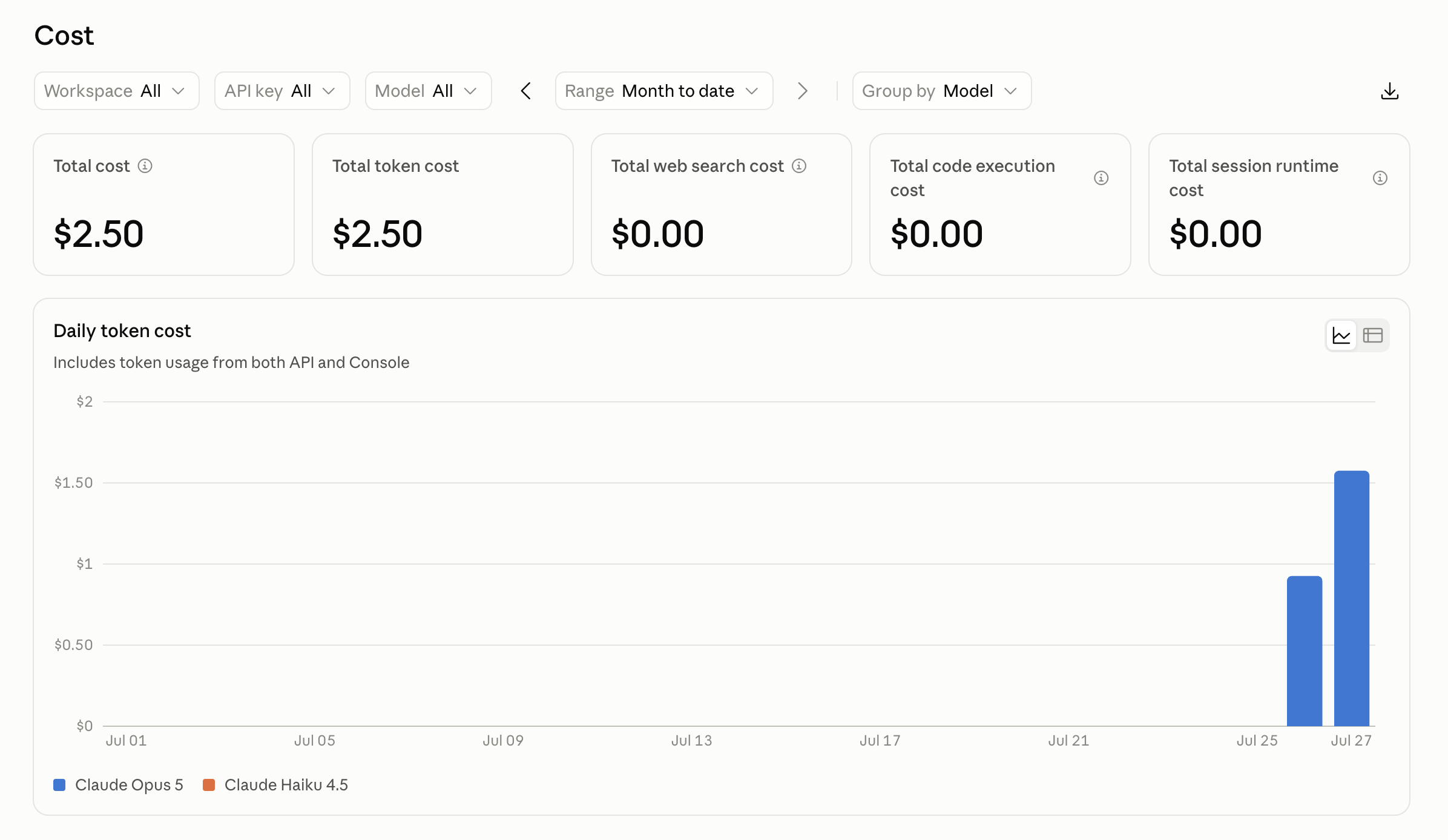
The original run happened on a consumer plan with no per-session meter. We recreated the already-built pipeline on direct API billing, preserved the session ledgers, and separately recreated one known boundary repair.
RERUN THE BUILT PIPELINE
$0.93
HOVER FOR WHAT IT MEANSA metered recreation of the editing procedure after the pipeline already existed — 18 billed messages, 802,075 cache-read tokens. It is not the cost of designing the pipeline from scratch. The render it produced was still not publishable — cleanup was modeled at another 35–50 minutes of human work.
REPAIR ONE KNOWN WORD
$1.58
HOVER FOR WHAT IT MEANSThe session was told which word was clipped and approximately where — 33 billed messages to execute and verify one known repair. It measures fixing a known defect, not discovering one. And the number is not multiplied by 17: real fixes can batch, and discovery remains a separate unmeasured cost.
THE WHOLE INVESTIGATION
$2.50
HOVER FOR WHAT IT MEANSBoth sessions combined. The Anthropic Console statement in the evidence vault shows both charges — $0.93 and $1.58 — as the only two bars of the month.
THE CATCH
The first pass costs a dollar.
HOVER FOR THE RESTThe last mile costs the afternoon. The dollar buys a render nobody can publish. Reaching a finished, trustworthy edit is still the job — and that work is measured in human minutes, not tokens.
The benchmark changed the product in one day.
The initial TimeBolt run produced 8 audible cutoffs. The test exposed the defect, v7.3.6 shipped automatically, and a same-file rerun with the original settings produced 2. The current scorecard uses the reproducible result customers receive today. The eight-count remains here as provenance for a defect that the current automatic update has patched out of existence.
| Run | Algorithm | Settings | Doug audible count |
|---|---|---|---|
| B1, initial | Old | Original | 8 |
| B2 | v7.3.6 | Changed bundle | 4 |
| B3 | v7.3.6 | Original | 2 |
Same algorithm. The changed bundle worsened the result. The individual knob was not isolated.
We predicted B3 would return near 8. It scored best. The failed prediction stays in the record.
What happens when the model improves?
The 17 will shrink. The structure will not.
A better model makes better editorial decisions, but the failure class documented on this page is structural, not a maturity bug: transcript timestamps do not carry acoustic boundaries. Words end in breath and consonant tails the text never sees. Our steelman pipeline included its own waveform refinement and still shipped 17 audible cutoff instances — and the regenerated run self-corrected exactly one known boundary while the others remained.
You cannot hear what is missing.
Whatever the model, a person has to verify the output against the source before publishing, and verification plus repair requires an editable timeline. That work does not scale down as models scale up. Neither does the rest of the job: managing source media, executing cuts reliably, keeping multitrack in sync, processing locally, keeping every decision reviewable and reversible, repairing the timeline, and handing off a finished artifact someone can approve.
A better Claude makes this layer more valuable, not less.
As agents take over editorial decisions, something deterministic still has to execute the cuts at the waveform level and hand a human a timeline they can trust and finish. TimeBolt is built to be that layer — the cut engine under the agent, the verification surface under the human.
REGISTERED IN PUBLIC LIKE EVERYTHING ELSE ON THIS PAGE: IF THIS PREDICTION IS WRONG, A FUTURE VERSION OF THIS PAGE WILL SAY SO — THE SAME WAY IT RECORDS EVERY OTHER PREDICTION WE MISSED.
09
The cost is measured by the repairs left behind.
Similar timelines can carry very different risks. We separated visible slop, destructive content errors, and acoustic boundary damage because each costs something different to find and fix.
The measurement transcript failed before the editor did: automatic transcripts inventoried the outputs, but they did not decide disputed acoustic boundaries — listening, source-time mappings, and waveform evidence did.
Visible in the timeline. Usually cheap to identify and delete.
Costs the repair time plus the harder cost of noticing it is missing.
Requires listening, locating the source, and rebuilding the splice.
DISCLOSURES — BIAS, PRIOR RESULTS, AND HOW THE REGENERATION WAS RUN
BIAS DISCLOSURE
I created the reference edit in TimeBolt because that is my normal workflow. To reduce that advantage, I did not score similarity to the TimeBolt timeline. I scored the actual operations and active time required to make each automated result publishable.
RECONCILING PRIOR RESULTS
TimeBolt's prior “zero cleanup” result applies to silence-and-filler benchmark files. Bad-take selection is harder and was scored separately at 96.8% safety, 85.5% cleanliness, and 90.6% F1.
Read the prior benchmark ↗The human answer key was created before the initial automated outputs were scored. For the current comparison, both automated edits were regenerated on July 26 from the same recording. Claude's replication reproduced all 98 editorial decisions and 43 KEEP selections. Five boundaries varied by 10 to 50 milliseconds, making the procedure decision-level reproducible, not byte-identical. TimeBolt ran v7.3.6 with the original settings. Neither regenerated output was repaired before Doug's standardized listening pass. Listening counts remained separate from transcript inventories and timestamp-distance measurements.
10
THE EVIDENCE VAULT
Conduct the test yourself.
Method, cut decisions, configurations, corrections, timing, and full transcript text are published as inspectable files and DOM text.
THE RAW FILE — 18:31, EVERY MISTAKE INCLUDED
Source and finished renders The untouched source, human reference, and automated outputs. 5 FILES
Word-level transcripts and measurements The input transcript, stronger measurement transcript, and post-cut measurements. 7 FILES
Claude pipeline and decision artifacts The executable pipeline, its configuration, every decision, and every retained range. 4 FILES
Method, corrections, and billing The scoring rules, corrections record, product ablation, and reconciled API bill. 8 FILES
Locked prompt artifact
Published in the vault as a labeled reconstruction: the frozen pipeline prompt, policy answers, and channel guard, prepended with a note that the original July 25 session text was not separately archived (original run: Claude Opus via the desktop app, version unrecorded; metered replication: claude-opus-5 via Claude Code 2.1.219). Read locked-prompt.txt.
Reference paid UMCheck transcript
How long is it? It's the first question everyone asks. This quarter, team, I had it a second ago. This quarter, let me start over. You don't want a 10-minute recording. You just want the 6 that matter. How do you make internal video watchable without handing your IP to cloud AI? Fast, secure, watchable. You get 2, never 3. Talk to a screen, share a raw video, that's fast, safe, but no one watches. So training didn't. Didn't happen. Edit by hand, it's secure and watchable, but you burn an employee. So someone reaches for cloud AI fast, clean, one click until you see what it cut. AI edit your video in minutes. Yeah, but here's the problem with Loom, DeScript, and most AI editors. They promise to cut the boring parts, but if it butchers the meaning, it's worse than doing nothing, and that's already annoying. And now your executive's voice, likeness, and IP sit on someone else's. Servers, but something has gone completely wrong, and the basic view among enterprises in this country is I'm going to chillax and waste my time with tokens. I'm going to get no value, and they're going to get my IP. TimeBolt solves the cleanup trap locally by cutting the signal itself, skips silence like it never even happened. First, the waveform finds the silence, physical signal locally processed. Then the transcript identifies what to remove filler, retakes, false starts, bad takes. But when the AI cuts too tight, the waveform corrects the cut boundary. That's the difference. TimeBolt is a lightweight app for Mac and PC. With Vault, the watchability layer runs inside your environment. Raw video never leaves your control. One engine every way your company records, async training, captions, podcasts, multi-track studio distributed to where you already work. SharePoint, Teams, Cultura. Or Ber. Time Bolt's own secure link. 11,700 paying customers since 2019. Vault takes proven speed behind your firewall. In this video, captured and edited entirely inside TimeBolt the product made the pitch. Fast, secure, watchable. Pick 3, your company is already recording the knowledge. Vault makes it watchable without the raw video leaving your control. Keep it real.
Download word-level JSONClaude paid UMCheck transcript
How long is it? It's the first question everyone asks. You don't want a 10 minute recording. You just want the 6 that matter. But how do you make internal video watchable without handing your IP to cloud AI? You get 2, never 3. Talk to a screen, share raw video. That's fast, safe, but no one watches, so training never even happened. Edit by hand, it's secure and watchable, but you burn an employee. So someone reaches for cloud AI fast, clean, one click until you see what it cut. AI edit your video in minutes. Yeah, but here's the problem with Loom, DeScript, and most AI editors. They promise to cut the boring parts. But if it butchers the meaning, it's worse than doing nothing. You get it, and that's already annoying. You've heard the pitch of that. And now your executives' voice, likeness, and IP sit on someone else's servers. But something has gone completely wrong, and the basic view among enterprises in this country is I'm going to chil wax and waste my time with tokens. I'm going to get no value and they're going to get my. TimeBolt solves the cleanup trap locally by cutting the signal itself, skips silence like it never even happened. First, the waveform finds the silence, physical signal locally processed. Then the transcript identifies what to remove filler, retakes, false starts, bad takes. But when AI cuts too tight, the waveform corrects the cut boundary. That's the difference. TimeBolt is a lightweight app for Mac and PC. With Vault, the watchability layer runs inside your environment. Raw video never leaves your control. One engine every way your company records as sync training, captions, podcasts, multi-track studio distributed to where you already were, SharePoint, Teams, Cultura, or Banger, Time Bolt's own secure link, 11,700 paying customers since 2019. Vault takes proven speed behind your firewall, and this video captured and edited entirely inside Time Volt. The product made the pitch fast, secure, watchable. Finally, all three, your company is already recording the knowledge. V Vault makes it watchable without the raw video leaving your control. Keep it real.
Download word-level JSONHistorical TimeBolt B1 paid transcript
THE STUTTERS BELOW ARE THE PATCHED DEFECT — THE INITIAL RUN THAT SCORED 8, FIXED TO 2 BY v7.3.6. KEPT AS PROVENANCE.
How long is it? How long is it? It's the first question everyone asks. This quarter, team, I had it a second ago. This quarter, let me start over. You don't want a 10-minute recording. You just want the 6 that matter. How do you make internal video watchable without handing your IP to cloud AI? You get 2, never 3. Fast, secure, watchable, never 3. Fast, secure, watchable. You get 2, never 3. So training never even happened. Talk to a screen, share a raw video, that's fast, safe, no one watches, so training didn't happen. Edit by hand, it's secure and watchable, but you burn an employee. AI fast, clean, one click, so someone reaches for cloud AI. Fast, clean, one click until you see what it cut. AI edit your video in minutes. Yeah, but here's the problem with Loom, DeScript, and most AI editors. They promise to cut the boring parts, but if it butchers the meaning, it's worse than doing nothing, and that's already annoying. I've heard the pitch of that. And now your executives' voice, likeness, and IP sit on someone else's servers. But something has gone completely wrong, and the basic view among enterprises in this country is I'm going to chillax and waste my time with tokens. I'm going to get no value and they're going to get my IP. TimeBolt solves the cleanup trap locally by cutting the signal itself, skips silence like it never even happened. TimeBolt But when the waveform TimeBolt the cleanup trap first, the waveform finds the silence, physical signal. Locally processed. Then the transcript identifies what to remove filler, retakes, false starts, bad takes. But when the AI cuts too tight, the waveform corrects the cut boundary. That's the difference. TimeBolt is a lightweight app for Mac and PC. With Vault, the watchability layer runs inside your environment. Raw video never leaves your control. One engine. Every way your company records async training, captions, podcasts, multi-track studio, distributed to where you already work, SharePoint, Teams, Cultura, or Banger, Time Bolt's own secure link, 2019, 11,700 paying customers since 2019. Vault takes proven speed behind your firewall. In this video, captured and edited entirely inside TimeBolt the product made the pitch, fast, secure, watchable. Finally, all three, fast, secure, watchable. Pick 3, video leaving your control. Your company is already recording the knowledge. Volt makes it watchable without the raw video leaving your control. Keep it real.
Download transcriptTimeBolt v7.3.6 B3 paid UMCheck transcript
How is it? How long is it? It's the first question everyone asks. This quarter, I had it a second ago. This quarter, let me start over. You don't want a 10-minute recording. You just want the 6 that matter. But how do you make internal video watchable without handing your IP to cloud AI? You get 2, never 3. Fast, secure, watchable. Never 3. Fast. Secure, watchable. You get 2, never 3. So training never even happened. Talk to a screen, share a raw video, that's fast, safe, but no one watches. So training didn't happen. Edit by hand, it's secure and watchable, but you burn an employee. AI fast, clean, one click, so someone reaches for cloud AI. Fast, clean, one click until you see what it cut. AI edit your video in minutes. Yeah, but here's the problem with Loom, DeScript, and most AI editors. They promise to cut the boring parts, but if it butchers the meaning, it's worse than doing nothing, and that's already annoying. You've heard the pitch of that, and now your executives' voice, likeness, and IP sit on someone else's servers. But something has gone completely wrong, and the basic view among enterprises in this country is I'm going to chillax and waste my time with tokens. I'm going to get no value and they're going to get my IP. TimeBolt solves the cleanup trap locally by cutting the signal itself, skips silence like it never even happened. TimeBolt But when the waveform TimeBolt the cleanup trap first, the waveform finds the silence, physical signal. Locally processed, then the transcript identifies what to remove filler, retakes, false starts, bad takes. But when the AI cuts too tight, the waveform corrects the cut boundary. That's the difference. TimeBolt is a lightweight app for Mac and PC. With Vault, the watchability layer runs inside your environment. Raw video never leaves your control. One engine. Every way your company records as sync training, captions, podcasts, multi-track studio distributed to where you already work, SharePoint, Teams, Cultura, or Banger, Time Bolt's own secure link, 2019, 11,700 paying customers since 2019. Vault takes proven speed behind your firewall. In this video, captured and edited entirely inside TimeBolt the product made the pitch, fast, secure, watchable. Finally, all three, fast, secure, watchable. Pick 3, video leaving your, your company is already recording the knowledge. Vault makes it watchable without the raw video leaving your control. Keep it real.
Download word-level JSONSUPPLEMENTAL — B1, REGENERATED RENDER, LEDGERS, PROMPT, DOCS 9 FILES
ARM B1 — LOCKED TIMEBOLT RENDER, 2:43.4 (THE SCORED ARM) ARM B1 — PAID WORD-LEVEL MEASUREMENT (410 WORDS) CLAUDE REGENERATED RENDER — JULY 26, 17-CUTOFF RUN SESSION LEDGER — FULL EDIT, $0.93 (JSONL) SESSION LEDGER — ONE-WORD REPAIR, $1.58 (JSONL) LOCKED PROMPT — LABELED RECONSTRUCTION (TXT) LOCKED ANSWER KEY (MD) SCORED RESULTS (MD) CROSS-SCORER CORRECTIONS TRACKER (MD)Automation does the mechanical work. The human makes it final.
TimeBolt gets you from an automated first pass to the final rough cut without surrendering the timeline.
GET TIMEBOLTKEEP IT REAL — TIMEBOLT, LLC